
What is Agriculture?
To answer the question of what is agriculture, let’s look at the definition first, then we can dive into history, learn how agriculture started and how it looks today.
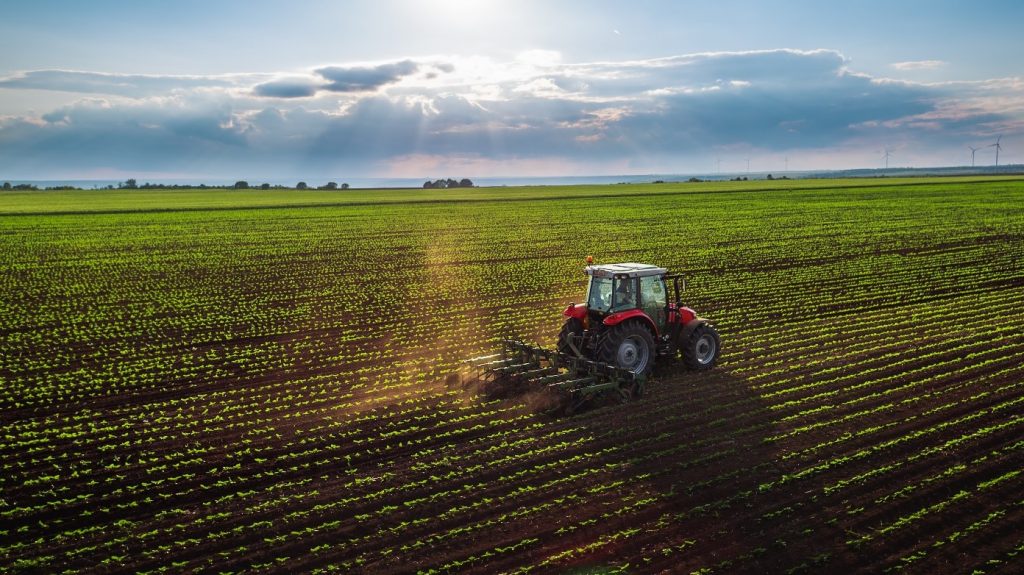
Agriculture is the science of farming, it includes the cultivation of soil for growing crops, rearing animals to provide food, wool and other products, and harvesting grown crops as effectively as possible.
It is agriculture that has allowed human civilization to expand to the great heights that it is at today, and it is agriculture that took humanity from the simple hunter-gatherer way of life to a more complex society.
The Origin of Agriculture
Agriculture was not ‘invented’ in a single flash of genius by one of our ancestors. The domestication of plants and animals happened very gradually over centuries, and often independently around the world. Though, such a development was only made possible after the last great Ice Age, when climates around the world became more stable and human populations could thrive again.
Historians have been able to track the development of agriculture in four major places around the world, the earliest signs come from the Middle East and China, before it spread into the Mediterranean and Europe and finally developed independently again in the Andes and mountains of South America. Let’s dive back into time and see how each of these civilizations used the skills of agriculture to improve their world.
Middle East
The hunters and gatherers of early human societies, particularly in the fertile crescent (modern day Turkey, Syria and Iraq), were experts on the plants and animals around them, the movement, needs and abilities of each animal was well known to these people because they relied on that knowledge to feed themselves and their children.
Around 11,000 BCE, people began to protect and herd the wild herds of goats, sheep, cows and pigs that moved up and down the valley. They also harvested wild cereals such as einkorn, emmer, and barley. At first, the methods they used were random and unorganized, people will pull weeds out of the ground to promote the growth of more of the plants they ate, or they would bring water from the river to water the plants. They would herd the animals simply, but did not build farms for them yet.
At around 8800 BCE, scientists noticed a change in our genetics, for the first time humans in this area had switched from eating primarily wild food to primarily farmed food.
China
Agriculture developed entirely independently in China and other countries of the far east of Asia. Findings at archaeological digs suggest that pig herding was being used as a method of food production as far back as 10,500 BCE in the Yellow River Valley.
By 8000 BCE, this same area had become a centre of millet cultivation and, alongside the industry of pig farming, sustained large villages such as Cishan. The domestication of wild rice soon followed and is still a stable ingredient in Asian cooking to this day.
Europe
The development of agriculture within Europe differs slightly from its development in China or the Middle East, early European societies benefited from the work done by the societies in the Fertile Crescent. Knowledge was traded back and forth between the cultures living on the shores of the Mediterranean for many centuries, and with it came the knowledge of farming.
Look at how farming came to Neolithic Ireland and developed over thousands of years with this fantastic PowerPoint.
Around 7000 BCE, farming was introduced to areas that would become modern day Greece, Italy and Spain, before moving north into Central Europe. It is thought that new arrivals from Africa, Asia and the Middle East brought with them domesticated plants and animals and elsewhere, local people adopted the same skills.
Once the skills had been taught, the art of farming exploded in Europe, with much of the land well suited to growing plants and feeding livestock.
The Americas
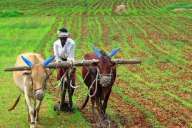
In the Andes mountains of South America, people experimented with cultivating potatoes and other root vegetables around 5000 BCE. They used llamas and alpacas to help them plough the soil, and even farmed the local guinea pigs as a source of food.
The hunter-gatherer way of life existed alongside farming here because there were far fewer species of animals suited to domestication and the land was more difficult to farm.
How did agriculture change human civilization?
The cultivation of crops and animals allowed humans to evolve beyond the nomadic lifestyle they had relied on for many thousands of years. Hunter-gatherer societies had to rely on the movements of animals, and this could lead to periods when hunting was very fruitful (but they could not store the meat for long) or periods with very little to eat.
Once more permanently, settlements were established around farming communities, people were able to store food that they could use during the winter months when hunting and gathering wasn’t possible. It also meant that for the first in human history, people could specialize into different tasks, until the advent of agriculture, each person dedicated their time to food production for themselves, their family and their communities. Once farming took hold, people had more food than they needed. They had time to develop new ways of building, new tools and new skills such as art, blacksmithing, and even music.
Let’s have a deeper look at some changes and innovations that were made possible by agriculture.
Population Growth
The earliest farming villages were small huddles of mud-brick houses, nestled together and separated by narrow spaces. These soon started to grow as more animals were added to the herds and as more crops were planted. Jericho, in the Jordan Valley, is one of the earliest villages known to have flourished in this way. By 8000 BCE the population had gone from a few families to a huge community of hundreds who created stone houses and a wall to protect their town and animals.
The ability to produce more food from a smaller area of space allowed populations to grow together and develop into towns and even cities. Without that, our society would not be possible.